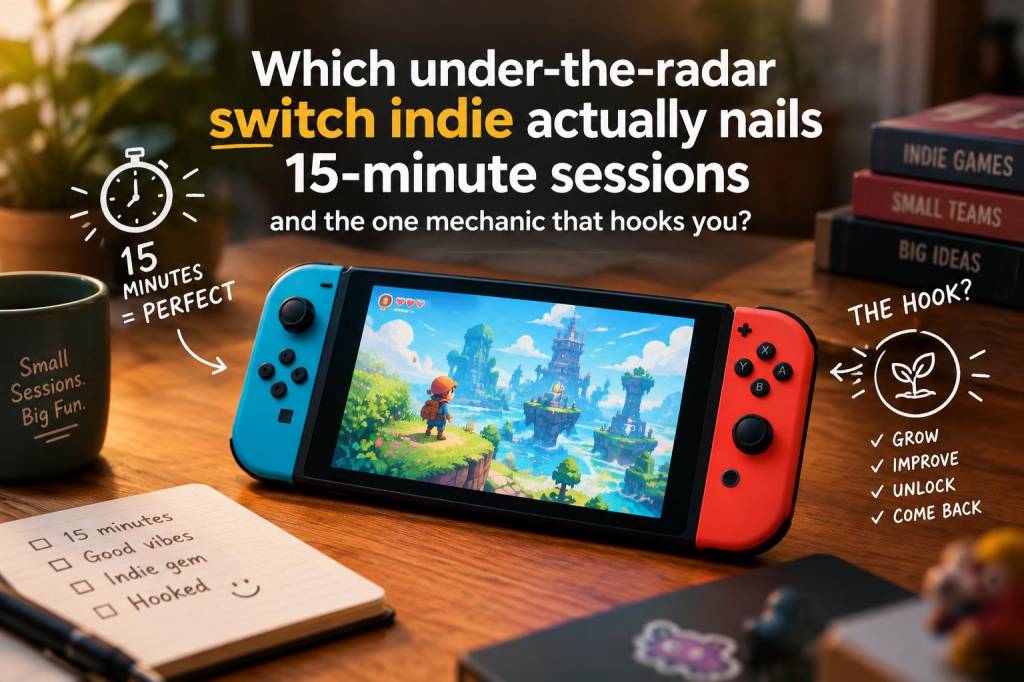
I first picked up Dorfromantik on the Switch thinking I’d try “one puzzle” while waiting for dinner. Two hours later I looked at the clock, laughed at myself, and loaded another session. That impulse — the way it slips into the small cracks of your day and refuses to let go — is exactly why this under‑the‑radar indie nails 15‑minute sessions better than almost anything else on the console.
What the game is, in plain terms
Dorfromantik is a serene tile‑placing game where you build a small, repeating landscape out of hexagonal tiles. Each tile has a mixture of fields, forests, water, and houses. You place one at a time, line up edges to create larger biomes, and meet simple objectives like “create a village of X houses” or “connect Y stretches of river.” It looks like a cozy board game, but the flow is pure slot‑sized gameplay: quick decision, small payoff, choose whether to keep building or cash in a tidy victory and stop.
Why it’s perfect for 15‑minute sessions
There are a few design choices that make Dorfromantik feel like it was tailor‑made for “I have a coffee and ten minutes” gameplay:
The one mechanic that hooks you: adjacency as a puzzle and reward
If Dorfromantik has a single magnetic idea, it’s this: adjacency scoring. The way tiles interact with neighbors isn’t just cosmetic — matching edges creates larger zones that grow in score and unlock bonus tiles or clear objectives. That adjacency system feels simple at first, then opens into a gorgeous loop of pattern recognition and spatial tetris‑style planning.
What makes adjacency addictive here is threefold:
How it holds up beyond the first fifteen minutes
There’s a popular complaint about “15‑minute games”: they can run out of depth. Dorfromantik surprises here. While any single session can be short and sweet, the game layers complexity via objectives, rare tiles, and map shapes that force long‑range planning. You’ll start to chase higher scores, craft deliberate biomes, and work toward aesthetic targets like “make a huge forest blob” or “create a long winding river.”
Challenge modes and new tile sets (introduced in updates and DLC) give you fresh constraints to keep the game interesting. The base game is calming and almost meditative; later on, if you want pressure, you can chase leaderboard scores or specific achievements that require sustained, careful runs.
How I play it in short windows (practical tips)
Why this feels different than other short‑session indies
I love Into the Breach and Slay the Spire for bite‑size runs, but Dorfromantik occupies a distinct niche. Those titles are about high‑pressure choices inside fixed missions; Dorfromantik is spatial, generative, and relaxing. It’s closer to a slow puzzle‑garden than a roguelike arena. That difference matters when you want to decompress: you don’t need perfect timing or deep memorization to feel accomplished here.
Switch controls and portability
The Switch is a perfect fit. Touch controls (if available in your version) are intuitive and feel like sliding pieces on a tabletop. Joy‑con play is simple and responsive—one button to pick, one to rotate, a flick and the tile drops. Performance is rock‑solid; the game runs smoothly in handheld and docked modes, which keeps those 15‑minute sessions frictionless whether you’re on the train or on the sofa.
Price, accessibility and value
Dorfromantik is reasonably priced for an indie experience that rewards both short and long play sessions. It’s accessible — low reading, clear icons, colors that communicate gameplay states — and it supports people who want to hop in, get a small win, and hop out. For anyone who wants a non‑violent, low‑stress pick‑up‑and‑play option, it’s a superb buy.
Who should try it
There’s magic in games that understand how we actually play: in short bursts, between other things, with a need for small victories. Dorfromantik gets that intuitively. The adjacency mechanic is a deceptively deep hook — it rewards the same tiny move you’d make in a coffee break and turns it into a small, gleaming triumph. If you’re after a Switch indie that respects your time and gives you joy in 15 minutes or less, give this one a try. You’ll probably stay longer than you planned — and then you’ll be glad you did.