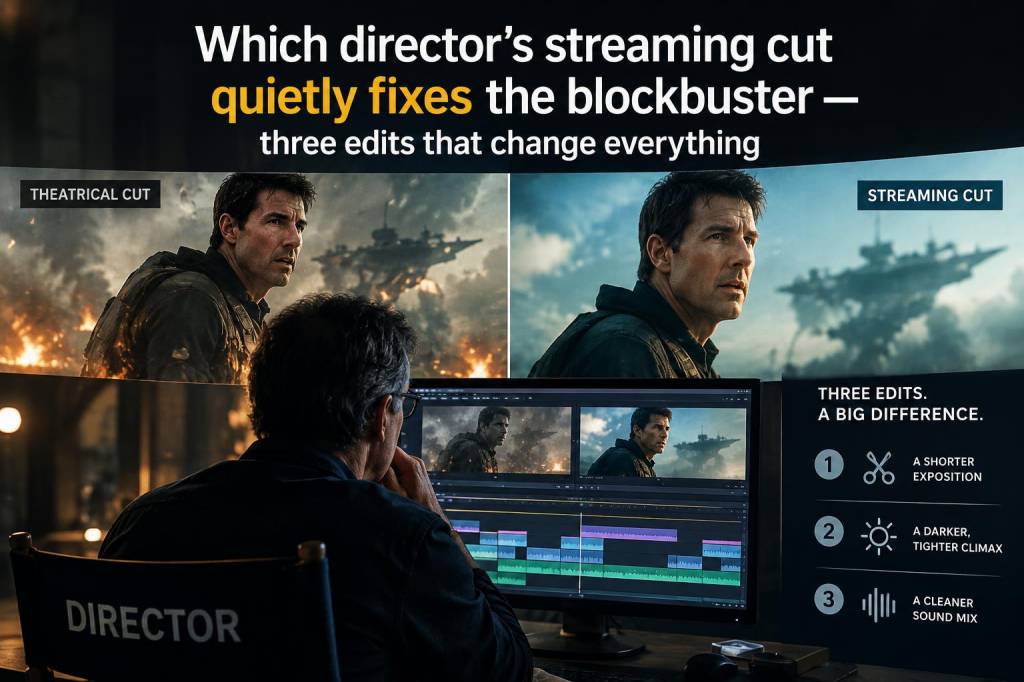
I’ve been fascinated by director’s cuts for as long as I’ve been writing about movies — there’s something delicious about a filmmaker getting the last word after a studio, a test audience, or a brutal theatrical runtime got theirs first. In the streaming era those alternate versions don’t just exist for collectors or DVD box sets: they quietly change how blockbusters are understood, shared, and debated. Below are three director-led streaming edits that, to my mind, genuinely fix the original releases — not just by adding deleted scenes, but by rethinking tone, structure, and character in ways that make the whole film click.
Zack Snyder — Justice League (The Snyder Cut)
This one is obvious, but it’s worth opening with because it’s the clearest modern example of a streaming cut that rewired a franchise. The theatrical Justice League (2017) felt like two competing visions: Snyder’s moodier, mythic approach versus Joss Whedon’s lighter, quippy retooling. The result was a patchwork that satisfied few.
The Snyder Cut (2021) — released on HBO Max — isn’t just longer; it’s a different film. Snyder restored his visual language (the grey-blue palette, the slow, sculptural compositions), but more importantly he reconfigured character relationships and stakes. Key differences that matter:
Is the Snyder Cut flawless? No — it’s indulgent and can feel overlong — but it demonstrates how a director’s streaming release can mend structural problems introduced in the theatrical cut and give audiences a coherent, intended experience. For anyone curious about DCEU world-building, it’s the version to watch.
Ridley Scott — Blade Runner (The Final Cut)
Blade Runner is a special case: a film that has been dissected via multiple editions for decades. But Ridley Scott’s Final Cut — widely available on streaming services and in digital stores — is the one that solidified the movie as a modern classic. The theatrical 1982 release included a voiceover and a studio-imposed happy-ish ending that softened the film’s existential bite. Versions in the 90s and early 2000s muddied the waters further with different edits.
The Final Cut (2007) is the only version over which Scott had complete artistic control, and it quietly repairs the blockbuster by:
On streaming, the Final Cut is the de facto version used for most restorations and retrospectives, and for good reason: it’s the edition that aligns with Scott’s intent and reframes the movie from a genre curiosity into a durable meditation on memory and identity. If you’ve only ever seen the theatrical cut, watch the Final Cut next — the film becomes smarter and more resonant.
Peter Jackson — The Lord of the Rings (Extended Editions)
Blockbusters rarely benefit from being longer, but Peter Jackson’s Extended Editions of The Fellowship of the Ring, The Two Towers, and The Return of the King are a rare exception — especially when consumed via streaming, where runtime anxiety is lower. The theatrical LOTR releases are tight and thrilling, but the Extended Editions quietly fix gaps that left book fans and newcomers wishing for more connective tissue.
Why the extended cuts matter:
When you watch on streaming you can approach these editions episodically — treat each film like a long-form TV chapter — and the payoff is massive. The emotional arcs land more cleanly, and the trilogy reads less like three big action set-pieces and more like a single, coherent epic. For viewers who want to sink into Middle-earth rather than skim it, the Extended Editions are indispensable.
How a streaming director's cut changes the conversation
Across these examples there are common themes in why a director’s streaming cut can “fix” a blockbuster:
Director’s cuts on streaming also change the cultural afterlife of a film. They invite reappraisal — critics and fans re-watch, re-evaluate, and sometimes revere a film that looked compromised in theaters. They make it possible for a movie to live multiple lives: one for the opening weekend crowd and another for viewers who want the version that matches the filmmaker’s voice.
When to choose which cut
Here’s my pragmatic advice when you see a blockbuster with multiple cuts available on your streaming service:
Streaming gives us the luxury of choice. You can watch both, compare, and then argue about it online — which, honestly, is half the fun.
One more thought
Not every director’s cut fixes a film, and not every change is an improvement. Some cuts are vanity; others are genuinely revelatory. But in the cases I keep revisiting — Snyder’s reimagining of a confused tentpole, Scott’s restoration of ambiguity, Jackson’s expansion of a beloved saga — the streaming edit doesn’t just add footage. It clarifies intent, reshapes character, and alters how the whole movie talks to us. That’s the real power of the director’s cut in the streaming era: it can quietly, decisively change everything.