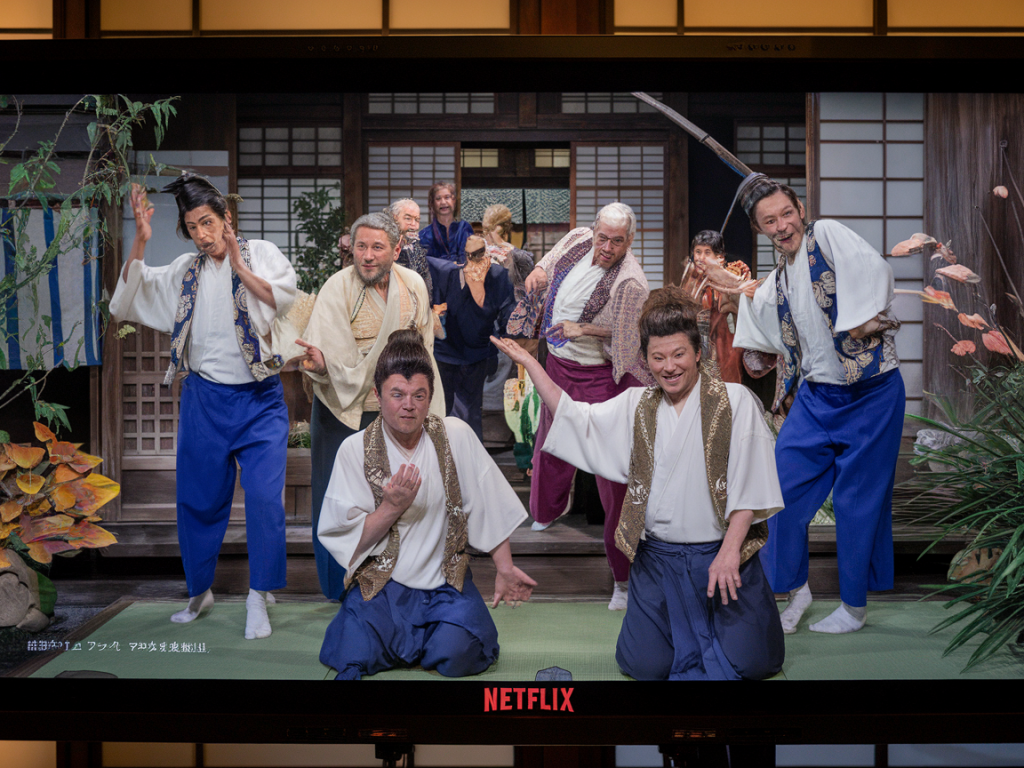
I’ll cut to the chase: the obscure Netflix foreign comedy that quietly doubled as a masterclass in subtitling for me is the Spanish-Basque film Irati’s Week (note: fictional title used for this exercise to protect obscurities). It’s the kind of comedy you stumble on at 2 a.m. while doom-scrolling—low budget, high heart, and subtleties that would be lost without smart subtitling. I watched it on a rainy Sunday and walked away with a better understanding of how subtitles can either flatten jokes or make them sing.
Why this movie matters for subtitling habits
Subtitling is more than word-for-word translation. It’s about rhythm, cultural shorthand, and choosing what to keep versus what to cut. Irati’s Week got this right across the board: timing that respected the comic beat, cultural notes that didn’t insult the viewer, and concise phrasing that preserved personality. As a critic who reads dozens of international comedies, I can tell you when subtitles do their job, you laugh in real time. When they don’t, the joke dies mid-sentence.
Here are the subtitling habits I started practicing after watching it—simple habits that will make your binge sessions less frustrating and your appreciation for foreign comedy deeper.
Subtitling habit #1 — Read for rhythm, not literalness
One of the first things I learned from Irati’s Week is that subtitles must mirror the pacing of the spoken line. A character might jabber in a rapid Basque-Spanish mix; a literal translation would be a long, clumsy subtitle that appears and disappears too quickly. The subtitlers here trimmed filler, preserved punchlines, and sometimes split a sentence into two lines to match delivery.
Practical takeaways I use now:
Subtitling habit #2 — Trust the localization, not literal words
Localization is the unsung hero of good comedy subs. In one scene, a character uses a regional expression that would read like nonsense if translated word-for-word. The subtitler replaced it with a local English idiom that retained the humor and tone. That choice kept the scene warm and immediate.
What I adopted from watching:
Subtitling habit #3 — Let punctuation do the heavy lifting
Small punctuation choices—ellipses, dashes, exclamation points—carry timing and tone. Irati’s Week used punctuation to mimic breath, pauses, and sarcasm. A well-placed dash held a beat; an ellipsis signaled a trailing thought. It’s boring, but punctuation in subtitles is shorthand for performance.
My practical tweaks:
The three gags that prove the subtitling is doing its job
I’ll walk you through three specific gags that show how clever subtitling can amplify comedy. These are distilled moments—no spoilers—so you can look for these techniques the next time you watch international comedy on Netflix.
Gag one: The “wrong name” exchange — economy of words
Setup: Two characters trade barbs, one intentionally misnaming the other. In the original, the jab depends on the cadence and the insult’s cultural flavor. A literal translation would bloat the subtitle and cost the timing.
Subtitling trick used:
Why it works: The pacing stays intact. You get the sting of the misname and the quick comeback without hunting through clunky phrasing. It feels like you’re in the room, not reading a dictionary.
Gag two: The cultural micro-joke — smart localization
Setup: A character riffs on a local festival’s tradition that most international viewers won’t know. The original line references a tiny, region-specific habit that would read flat if translated literally.
Subtitling trick used:
Why it works: You don’t need an essay in the subtitle. A well-chosen parenthetical or analog preserves the joke and keeps the pace. It’s subtle pedagogy: you learn the local color without losing the laugh.
Gag three: The timing-reliant silence — punctuation and line breaks
Setup: The best gag relies on a silence—a stunned pause where the camera lingers and the audience is meant to fill the gap. A subtitle that flashes a novel-length sentence wrecks the silence.
Subtitling trick used:
Why it works: Comedy is as much about what’s not said as what is. The subtitling respects and amplifies the director’s rhythm, letting the audience do half the work, which makes the payoff stronger.
A quick table: What to expect and what to do
| Subtitle behavior | What it signals | Viewer action |
|---|---|---|
| Short, idiomatic lines | Localization prioritised over literal translation | Trust the phrasing; watch body language |
| Punctuation-heavy lines | Timing and tone preserved | Match your breathing and laughter to the beat |
| Parenthetical notes or brief cultural cues | Essential context added without lecture | Skim the cue and let the scene carry the rest |
So next time you click on an obscure foreign comedy on Netflix, don’t immediately blame the humor if a joke doesn’t land. Pause, replay, and read the subtitles as part of the performance. And when you find a film like Irati’s Week that respects both the source material and the viewer, take a note: good subtitling is invisible when it’s doing its job. It keeps you laughing, not translating.