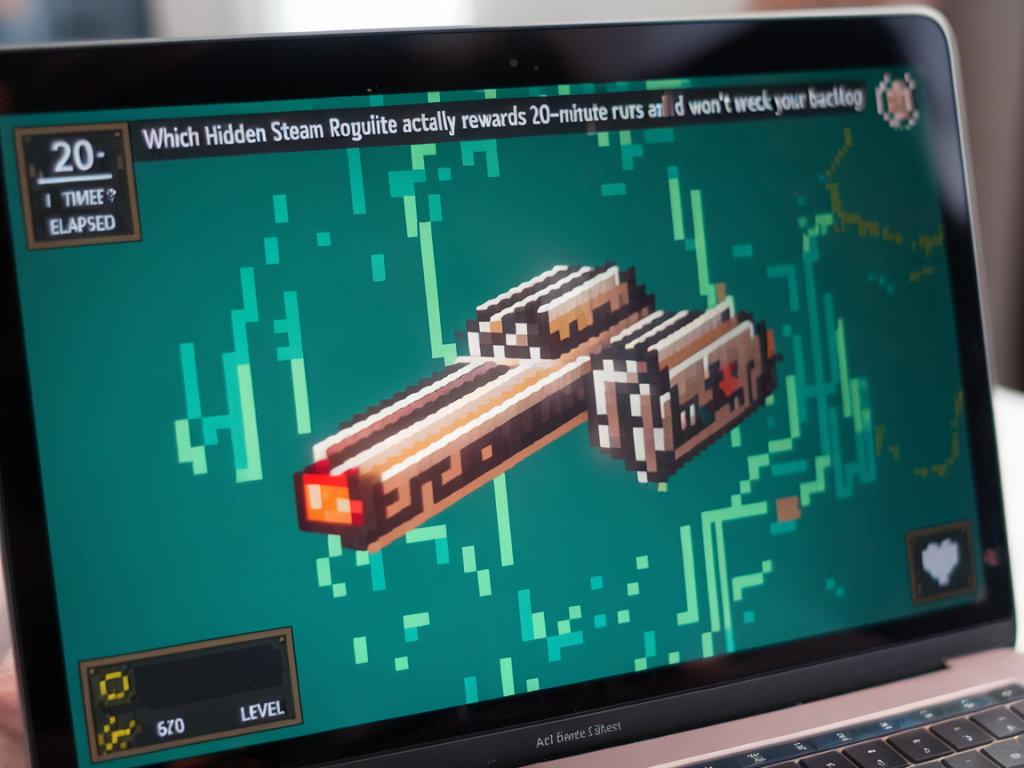
I’ll be blunt: most roguelites promise "just one more run" and deliver a six-hour commitment that kills your evening and your backlog. I wanted something that scratches the loop itch — the tension, the randomized upgrades, the tiny rush of getting a build to click — without demanding a narrative sit‑down or a full night of gaming. After trying a handful of hidden gems on Steam, one title kept popping up as that rare bird: Curse of the Dead Gods.
It’s not the loudest roguelite on storefronts, but it nails the sweet spot. Runs are compact and tense, progression feels meaningful, and the game respects your time. If you’ve got twenty minutes between errands, a half hour before bed, or a train ride where you want something bite‑sized and rewarding, this is the kind of roguelite that gives you the dopamine without consuming your life.
Why Curse of the Dead Gods works for 20‑minute runs
Three things make it ideal for short sessions:
What you actually do in a run
Gameplay is tightly focused: explore rooms, dodge traps, stomp into combat, pick up upgrades, and decide whether to push forward or bail with your haul. The combat sits between action‑RPG and soulslike: precise dodging, weapon variety (maces, bows, dual blades), and a satisfying hit feedback loop. Traps are everywhere, and learning to move through a room while predicting spikes, rolling boulders, flame vents, and curse shrines is part of the fun.
Each run has a clear endpoint (a boss or boss pair), which gives you a natural timebox. For skilled players who learn to minimize downtime, a run can comfortably sit in the 15–30 minute window. For everyone else, expect 30–45 while you learn the traps — still manageable compared to some roguelites that require hours to get to the first real choice.
How it won’t wreck your backlog
Tips to make your 20‑minute runs feel meaningful
How it compares to other roguelites (quick reference)
| Game | Typical short run | Meta progression pace | Best for |
|---|---|---|---|
| Curse of the Dead Gods | 15–30 min | Fast — steady unlocks | Quick, tense action with trap puzzles and risk choices |
| Dead Cells | 20–40 min | Moderate — weapon/skill unlocks | Fluid combat; ideal if you want platforming plus action |
| Hades | 30–60 min | Slow but satisfying narrative unlocks | Story-driven roguelite with rich characters |
Who should pick it up (and who shouldn’t)
Practical stuff: platforms, price, and add-ons
Curse of the Dead Gods is available on Steam and supports both mouse/keyboard and controllers well. The game frequently goes on sale, and the DLCs add new gods and mechanics that keep later runs interesting. If you’re worried about saving money on the wrong thing: wait for a sale, but don’t wait too long — the base loop is worth the entry price even for a few weeks of short sessions.
Final note: this game rewards experimentation more than memorization. I’ve had runs where I walked away after beating the first boss and felt like I’d finished something meaningful. Other times I pushed deeper and learned a new relic combo that changed my approach. That variability is the point. It gives you control over how much time you want to invest without punishing you for stopping when you need to.