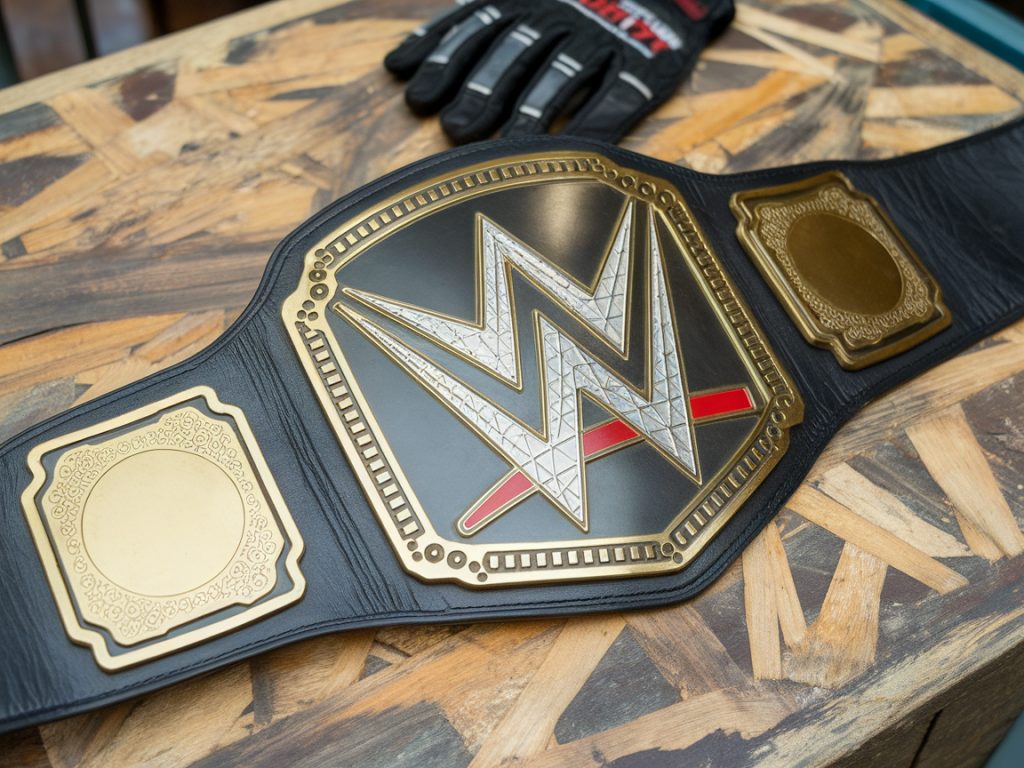
I scroll through Instagram the same way I scan a highlight reel — fast, hungry for the good stuff, and suspicious of anything that looks too perfect. Fake championship belts pop up all the time: propped on beds, slung over shoulders, or held by smiling "owners" who just happen to sell you a replica. After too many close calls and one regrettable PayPal refund, I developed a quick visual routine that lets me call a belt fake in under ten seconds. Here are the five cues I check every time.
Start with the center plate — logos and lettering tell the story
The center plate is where brands and promoters put their identity, and it's where counterfeiters most often cut corners. In a split-second look:
Check the logo fidelity. Is the promotion's logo crisp and correctly proportioned? WWE, AEW, UFC and other brands have specific wordmarks and emblems — any wobble, wrong font, or misaligned emblem is a red flag.Look at the lettering depth. Real belts usually have deeper engraving or relief on the plates. If the letters look shallow, flat, or photoshopped (sharp edge next to unnatural blur), it's likely a cheap cast replica.Watch for missing tiny details. Authentic plates include small hallmarks, trademark symbols, or serial numbers. Their absence or sloppy attempts to add them later (cropped or pasted in images) is telling.Pro tip: zoom in on the Instagram image if you can. A real metal plate catches light in a layered way; low-quality plating reflects like plastic or has a uniform shine that screams costume jewelry.
Edge work: screws, rivets, and plate mounts
The way plates are attached tells you a lot about quality. I count these things mentally while I scroll:
Are the screws or rivets uniform and neat? Authentic belts use consistent, well-finished fasteners. Sloppy glue residues, mismatched screws, or visible gaps where plates meet the leather are giveaways.Do plates sit flush? Genuine championship plates are mounted to sit smoothly on the strap. If plates look warped, wobbly, or have odd angles where they meet the leather, the belt is probably aftermarket.Watch for reflections around screws. Metal screws in real plates reflect environment differently from the matte or plasticky screws often used on fakes.These are quick visual ticks — if the hardware doesn't match the brand's photos, move on.
Leather and strap quality — texture beats color
Most counterfeiters try to fake luxury with color choices (gold, black, red), but they trip up on material.
Look for grain and stitching. Genuine leather has natural grain, slight imperfections, and tidy stitching. Faux leather often has a repetitive texture pattern and uneven thread work.Edge finishing matters. Authentic straps have cleanly finished edges, sometimes with painted or rolled edges. Rough or frayed edges are cheap signs.Check for structural shape. Real straps are stiff enough to hold the plate's weight without sagging. If the strap looks limp or has weird creases around the plates, the internal support (or lack of it) exposes the fake.Even in a single photo, strap contours and stitch lines give away more than color or shine.
Patina, wear, and reflection — real belts age like metal, not plastic
Authentic belts show natural wear and a believable patina if they're used and displayed. Counterfeits usually have an overly uniform "new" look or fake aging that reads wrong.
True metal has subtle color gradations and micro-scratches. Plastics and cheap alloys often present a uniform, glossy surface that reflects like glass.Real gold or nickel plating will show edge wear where hands touch the plates — slightly darker recessed areas and shinier raised portions. Overly consistent shine across the entire plate suggests vacuum-plated or spray-painted finishes.Watch reflections. In many Instagram photos you can see environment reflections on shiny plates. If reflections look like stretched repeats or show odd pixelation, the image may be edited or the material is a poor substitute.Basically: metals age realistically; plastic and poor plating try too hard to look "brand new."
Context clues: background, packaging, and seller signals
Never ignore the rest of the frame. I can tell a lot from a seller's bio and the setting of the photo in under three seconds:
Is there professional packaging or a certificate of authenticity visible? Legitimate sellers often show branded boxes, warranty cards, or clear provenance photos. A phone-on-a-bed shot is suspicious if the price is high.Check the seller's profile. Do they have a history of selling belts or wrestling memorabilia? New accounts with one post, a brand-new follower spike, or inconsistent branding should make you pause.Price versus product. If a belt purports to be "custom metal" or an "official replica" for a fraction of market value, that's a fast fail. There are quality repros (Jacketshop, Ringside Collectibles, and trusted makers like Replikaz make decent licensed belts), but they rarely list for deep discount.Context is the tie-breaker: the same plate shot looks believable when paired with a branded box, store link, and long-standing account, and dubious when it's a quick post from a seller with nothing to lose.
Quick ten-second checklist
If you're ever unsure, run this mental checklist while you scroll. It takes less than ten seconds and will save you a bad purchase:
Center plate check: Is the logo and lettering crisp and complete?Hardware check: Are screws/rivets uniform and plates mounted flush?Leather check: Is the strap grain and stitching consistent with real leather?Finish check: Do reflections and patina look metallic, not plastic?Context check: Does the seller profile, packaging, and price make sense? | Cue | Quick sign of authenticity | Quick sign of fake |
| Center plate | Crisp logo, deep engraving, small hallmarks | Blurry logo, flat letters, missing marks |
| Hardware | Uniform screws, plates sit flush | Mismatched screws, gaps, glue residue |
| Leather | Natural grain, neat stitching, stiff shape | Repetitive texture, loose threads, limp strap |
| Finish | Layered reflections, edge wear | Uniform glossy plastic look |
| Context | Branded packaging, consistent seller history | One-post seller, too-good price |
When to dig deeper and how
Sometimes a belt ticks a couple of boxes and still feels off. That’s when I take more than ten seconds:
Ask for a video. A short clip of the belt turned under good light will reveal reflections, plate thickness, and hardware details better than photos.Request close-ups of hallmarks or serials. Many official belts or licensed replicas show maker stamps; fakes often fake those marks badly.Reverse-image search the photo. If the image appears on multiple listings with different claims, it's probably stock photography or stolen imagery used by scammers.Check for provenance. Serial numbers, previous auction links, or photos with known wrestlers can confirm authenticity.If the seller refuses any of the above or pushes instant payment, walk away. Trust is the currency here — and lost trust means lost money.
I’ve learned that quick visual literacy goes a long way. You don’t need to be an expert to avoid a fake: you just need to know what real belts look like up close and how cheap replicas try to imitate them. Keep these five cues in your pocket the next time you scroll through Instagram — they’ll help you spot fakes faster than most seller blurbs can convince you otherwise.