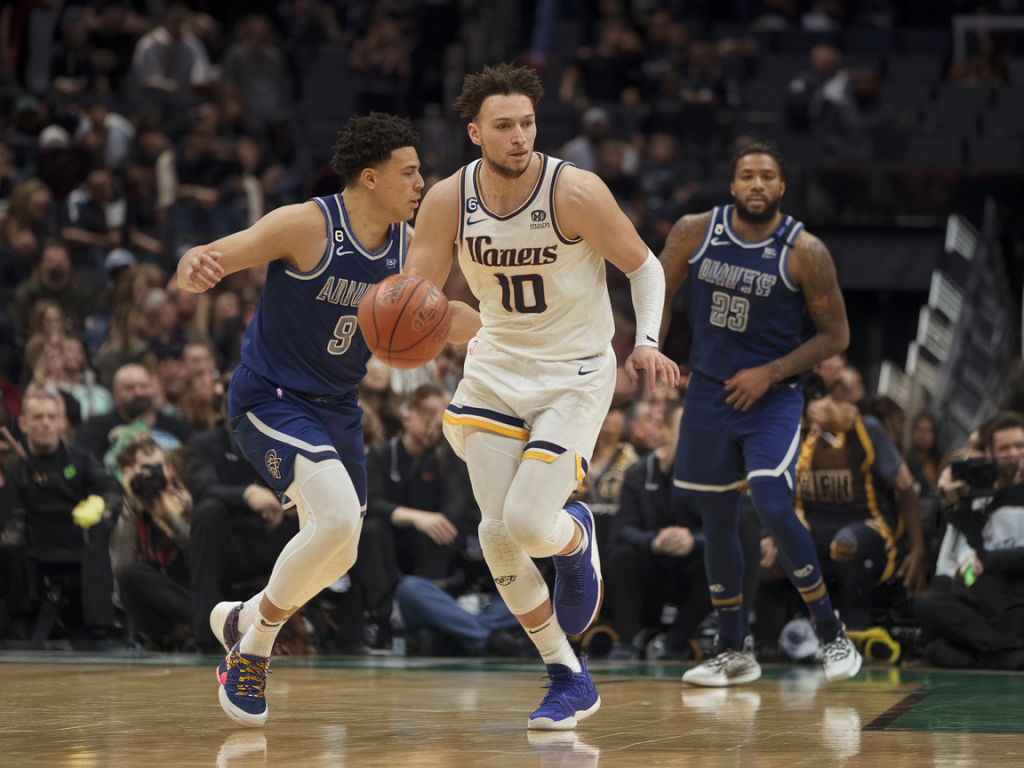
I’ve watched my fair share of jaw-dropping sports moments — last-second buzzer-beaters, fluky own-goals, and knockout punches that live forever online. Lately, though, every time a wild clip drops in my feed I treat it like a tiny puzzle: is this the real thing, or some deepfake/sharebait cooked up for clicks? Social platforms are a breeding ground for both genuine highlights and cleverly manipulated fakes, so I’ve developed a checklist and a few habits that help me separate the legit from the manufactured fast. Below are the practical steps I use whenever a highlight makes me pause.
Look at the source first
The fastest sanity check is where the clip came from. If it’s posted by an official league, team, broadcaster, or a verified journalist, I’m already more trusting. Major rights-holders (NFL, NBA, FIFA, UEFA, MLB, TNT, Sky Sports, ESPN) and their verified accounts have a stake in accuracy — they rarely push out obviously doctored footage.
On the flip side, anonymous accounts with zero history posting a “god-tier” moment? That’s a red flag. I give them a healthy dose of skepticism and dig deeper before I react or share.
Check visual and audio continuity
Deepfakes and edits often slip up on simple details that are easy to miss at first glance but obvious if you look closely:
Those are small, human cues that algorithms haven’t fully replicated yet. I’ll often slow the clip to 0.25x or step frame-by-frame to inspect the moment.
Reverse-image and video search
One of my favorite quick moves is to run a still from the clip through reverse-image search tools. Google Images and TinEye can reveal prior instances of the same frame. For video, tools like InVID (a browser plugin) help extract keyframes and run reverse searches across platforms. If the “miracle goal” showed up earlier in a different match or a different stadium, you’ve got your answer.
Match the metadata and timestamps
Context matters. Look for:
If the clip lacks a broadcast overlay or the scoreboard looks inconsistent, that’s a common manipulation technique. Pro broadcasters rarely zap overlays entirely; that’s a clue the footage was stripped or re-rendered.
Cross-check with reputable outlets
I always check trusted sports feeds after a viral clip appears. If BBC Sport, ESPN, official team channels, or major beat reporters aren’t referencing a huge play, it’s worth pausing. Tools like CrowdTangle and the X (Twitter) search timeline can show whether credible sources picked it up within minutes. If a highlight is truly monumental, it usually bubbles up through established channels fast.
Look for watermark and broadcasting cues
Broadcast watermarks (e.g., ESPN logo, Sky Sports bug) and camera-operator consistency are tell-tale signs of authenticity. Deepfakes often add staged watermarks or none at all. If a watermark is blurred, partially cropped, or inconsistent with the camera’s angle, that’s suspicious.
Use verification tools and services
When I need to be certain, I lean on specialized tools:
These tools won’t always give a binary answer, but they provide technical indicators (face warping, inconsistent noise patterns) that greatly help the human judgement call.
Consider the narrative and motive
Every viral clip exists in a context. Ask: who benefits if this clip spreads? Sensational twists are often monetized through ad revenue or political/social agendas. If the post’s caption is clickbait-y, emotionally charged, or written in ALL CAPS to provoke anger or shock, treat the content as potentially manipulated until proven otherwise.
Check crowd reaction and replay variety
Genuine live sports moments usually have multiple camera angles, replays, and crowd reaction shots. If you only see a single isolated clip without sideline cam, referee angle, or extended replay, that increases the chance it’s been spliced from elsewhere. Replays and reaction shots also make it much harder to convincingly fake the entire scene.
A quick verification checklist I use
| Step | What I look for |
| Source | Posted by official/verified account? History of similar posts? |
| Visual cues | Lighting, motion blur, facial micro-expressions, audio sync |
| Metadata | Timestamps, broadcast overlays, stadium signage |
| Cross-check | Coverage by major outlets or beat reporters |
| Tools | InVID, Sensity, Google reverse image |
| Narrative | Who benefits? Does the caption smell like bait? |
Those steps usually take me five minutes or less. The goal is not to be paranoid but to avoid being an unwitting amplifier of something fake.
When you’re still unsure
If after checks you’re undecided, pause before sharing. Label it as “unverified” if you post it, or better yet, wait for confirmation. Credibility matters in sports coverage; one mis-shared clip can spread misinformation faster than any official correction.
Finally, remember that verification is a skill worth practicing. The more you look for subtle cues — mismatched audio, odd shadows, wrong ad boards — the faster you’ll spot fakes. Social feeds will keep serving both the miraculous and the manufactured. I try to enjoy the genuine magic and treat the rest as a puzzle: there’s always something interesting to learn, even from a fake.