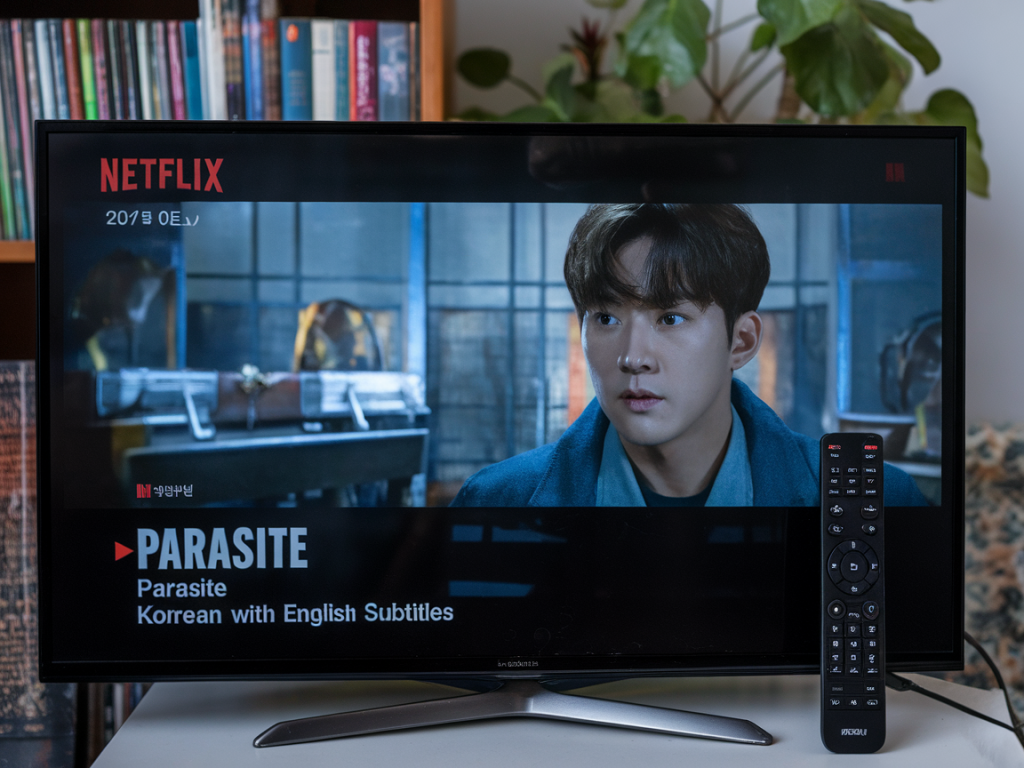
I wasn’t expecting a minor Netflix foreign drama—one that had slipped under my radar for weeks—to quietly rearrange how I think about subtitles. But that’s exactly what happened with The Quiet Orchard, a slim, melancholic series from a small European production company that landed on Netflix with little fanfare. It didn’t just make me read the captions; it made me listen differently, notice the silences between lines, and appreciate subtitles as part of the filmmaking craft rather than a mere translation tool.
Here’s the thing: most people treat subtitles as a temporary crutch—something you tolerate until you find an English dub or decide the show’s not worth the hassle. I used to be pragmatic about it. Subtitles were functional, occasionally irritating, often clumsy translations that either oversimplified idioms or stuffed five syllables into one tight subtitle. The Quiet Orchard changed that. Watching it, subtitles felt like an interpretive stroke by the filmmakers themselves. They were rhythm, emphasis, and a second voice layered on top of the original dialogue. That subtle design choice made three scenes stand out, and each one proved a different way subtitles can shape meaning.
Why this matters: subtitles as creative choices, not just literal text
Before I dig into the scenes, let me explain what I mean by subtitles as a creative element. Good subtitling does four things simultaneously: it translates meaning, preserves tone, times itself with syntax and visual beats, and accepts constraints (reading speed, screen space) while still conveying subtext. Most commercial subtitles focus on accuracy and speed. The Quiet Orchard’s subtitles do that—and more. They bend to the show’s rhythms, punctuate silences, and sometimes deliberately omit words to preserve ambiguity. That last move is a radical choice: leaving a blank where a literal translation would clog the moment forces the viewer to feel the pause rather than parse it.
So, what changed for me? Three scenes. Each one taught me a different lesson about subtitles and how they can—if handled well—elevate the entire viewing experience.
Scene 1: The kitchen argument (why timing matters)
Set-up: Two siblings argue over an old family recipe in a cramped kitchen. The scene is loud—pots clank, a kettle whines—but the script uses short, clipped lines. Emotion is underneath, never fully expressed.
What Netflix’s subtitles did: Instead of forcing direct, line-by-line translations, the subs mirrored the cadence of the spoken words. Short sentences appeared and vanished quickly; longer lines were split across two subtitle frames timed to match the actor’s breath. When one sibling trails off mid-sentence, the subtitle leaves a deliberate ellipsis rather than finishing for them.
Why this proves something: Timing in subtitles is often overlooked. You can have a perfect translation, but if the text displays out of sync with a visual beat, the scene feels disjointed. In this kitchen argument, the subtitles became part of the scene’s rhythm. They respected pauses, mimicked interruptions, and let the silence land. As a viewer, that made me feel the hesitations rather than read through them. Subtitles, in this instance, amplified the performance.
Scene 2: The untranslated proverb (why omission can be powerful)
Set-up: A grandmother feeds the protagonist a proverb in her native dialect. Literally translating it would have produced a clunky English sentence dense with cultural markers.
What Netflix’s subtitles did: Rather than force a line-by-line literal translation, the subtitle opted for a shorter, idiomatic rendering that captured the proverb’s emotional weight—plus an intentional footnote strategy. For a beat, the subtitle displayed the idiom in English, then briefly removed any explanatory text, letting the image of the grandmother’s hands and the protagonist’s face carry the meaning.
Why this proves something: Subtitling convention leans toward exhaustive clarity: say everything and clarify everything. But this scene proved that omission—paired with the right visual context—can be more truthful to the spirit of a line than a clunky literal rendering. That brave choice respected the audience’s intelligence and the scene’s visual cues. I found myself leaning into inference rather than being spoon-fed a cultural explanation, which made the moment more resonant.
Scene 3: The final whisper (why subtitling tone is everything)
Set-up: In the penultimate episode, a character confesses something crucial in a near-whisper. The camera lingers on their mouth; the room is almost silent. There’s no musical cue to tell you how to feel—everything depends on subtle vocal inflection.
What Netflix’s subtitles did: The subtitles here were minimalistic. Instead of transcribing every word, they displayed fragments. Italics were used to show the speaker’s inner mutterings versus spoken clarifications. One line was left as a single word positioned alone on the lower corner of the screen—breathing room, visually and emotionally.
Why this proves something: Translating quiet speech is notoriously difficult because the text can easily flatten nuance. The Quiet Orchard’s subtitlers matched tone through formatting. By choosing fragmentary lines and typographic emphasis, they preserved the confession’s intimacy. The effect felt indistinguishable from a directorial choice—the subtitles were not translating the whisper; they were echoing it.
Practical takeaways for viewers and creators
I won’t pretend The Quiet Orchard is flawless. Its pace can feel glacial if you’re not invested, and some plot threads drift. But as a case study in subtitling craft, it’s a revelation. It forced me to see subtitles as collaborators in storytelling—little editorial decisions that shape the feeling of a scene, not just its semantic content.
If you’re skeptical, don’t take my word for it: pick a foreign-language drama at random, turn on the original audio and pay attention to how the subs behave. You might find, as I did, that better subtitling doesn’t just translate a show—it translates your viewing experience.