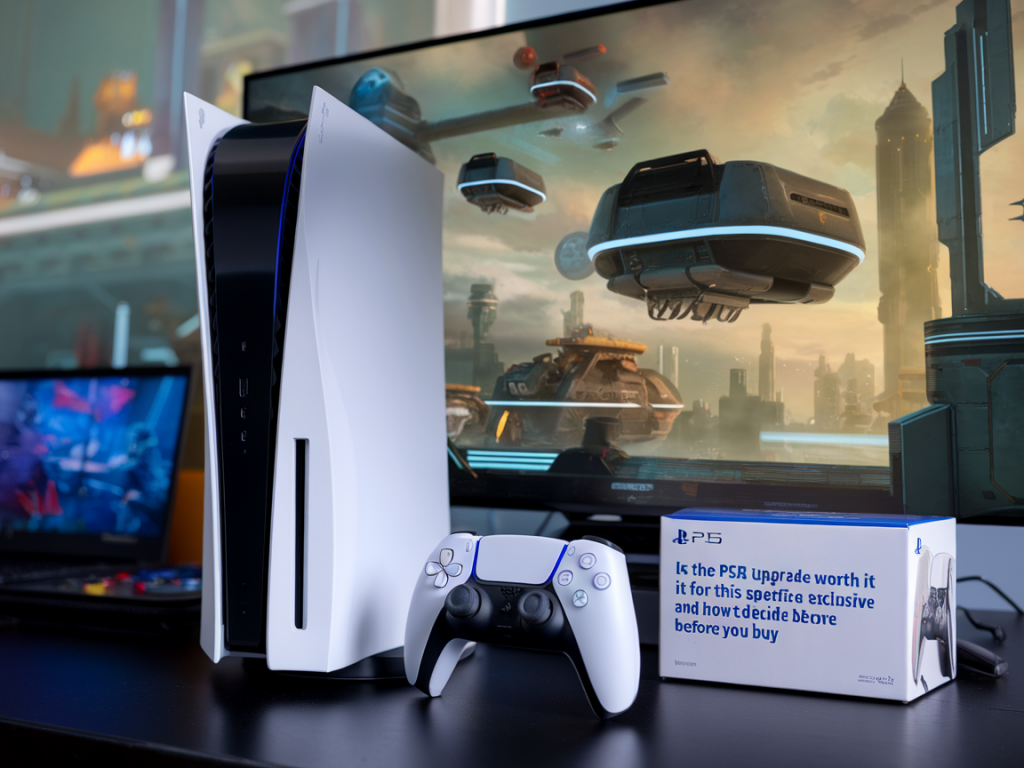
I bought the PlayStation 5 for one main reason: to play games the way their creators intended on current hardware. Lately I've been asking myself (and getting asked by readers) whether a PS5 upgrade is worth it for a specific exclusive — you know the kind: a game that started life on PS4 or Xbox One and now has a “free” or paid PS5 upgrade. Here's how I break that down when deciding whether to plunk down cash, wait for a patch, or stick with the older console.
Start with the facts: what does the upgrade actually do?
Not all “PS5 upgrades” are created equal. Some are simple performance patches, some add ray tracing and higher resolutions, and some rework loading times and DualSense features. Before anything else, read the patch notes or the publisher’s upgrade page and answer these concrete questions:
If the upgrade is mostly loading-time fixes and a small frame rate bump, it's a lower priority purchase for me. If it adds meaningful visual upgrades, stable 60fps, and DualSense support that alters the gameplay loop, I'm much more willing to recommend the upgrade.
How much do those technical gains matter to you?
Here’s where personal taste and play style kick in. I’m someone who notices frame-rate drops and texture pop-in immediately — smoother performance changes how a game feels. But I also know plenty of players who prioritize story and don’t mind 30fps if the narrative, art direction, and pacing are intact.
In short: weigh whether smoother performance or better visuals will significantly affect how you experience that specific exclusive.
Price vs content — is it a fair upgrade cost?
Some upgrades are free. Others cost $10–20, and a few require the full price of the game. I think of the price tag in two ways:
If the upgrade costs the same as a new release, I expect near-substantial improvements — better textures, faster load times, DualSense integration, and perhaps additional content. If it’s a modest fee, my tolerance for smaller enhancements is higher.
Ask about saves, cross-gen progress, and multiplayer
Nothing kills a purchase faster than losing progress. Before upgrading, check whether save transfers are supported. If not, you’ll be replaying parts you didn’t want to. Also consider the multiplayer community:
I once delayed upgrading an online-exclusive because the playerbase split made matchmaking a mess. That’s an easy way to regret a rushed upgrade.
Storage, install sizes, and real-world performance
PS5 SSD magic sounds great on paper, but real life varies. The PS5 version will likely install larger files, and if you’re tight on SSD space you’ll need to manage installs differently. Also, early patches sometimes introduce bugs — frame pacing issues, stuttering, or crashes — so watch early reviewer reports and community threads.
Look at reviews and hands-on impressions
When I don’t have time to test everything myself, I lean on two types of sources:
If the technical reviews show a clear, consistent improvement and user feedback backs that up, I consider the upgrade validated. If it’s split or reviewers call the upgrade “marginal,” I wait.
A personal rule-of-thumb checklist
I use this mini-checklist before buying an upgrade. If three or more of these are true, I usually buy:
| Major fidelity boost | Native 4K, better textures, ray tracing |
| Significant performance improvement | Stable 60fps or removes major dips |
| DualSense/Audio changes | Haptics or 3D audio meaningfully alter gameplay |
| Fair price | Upgrade cost proportional to changes (usually ≤ $20 for incremental) |
| Save transfer supported | No need to replay large sections |
| Active community / multiplayer sanity | Doesn’t split playerbase or leaves competitive matchmaking intact |
Examples from recent upgrades
To make this less abstract: Spider-Man: Miles Morales felt worth a PS5 buy for many because of dramatic load-time improvements, visual polish, and haptic feedback that actually added to web-swinging. On the flipside, some sports titles that promised minor frame-rate improvements but kept most assets identical felt cheap and unnecessary.
When to wait
Wait if:
Final decision framework (quick)
Answer these three questions quickly: Will the PS5 version make the game feel different in a way I care about? Is the price reasonable for those changes? Are saves and multiplayer handled cleanly? If yes, buy. If no, wait for a sale, patch, or deeper community consensus.
I’ll keep testing and writing about upgrades as they land. For now, remember that “worth it” isn’t universal — it’s personal. Use the checklist, read the technical takes, and be honest about what you value most: visuals, performance, or just the story. That will get you the right call every time.