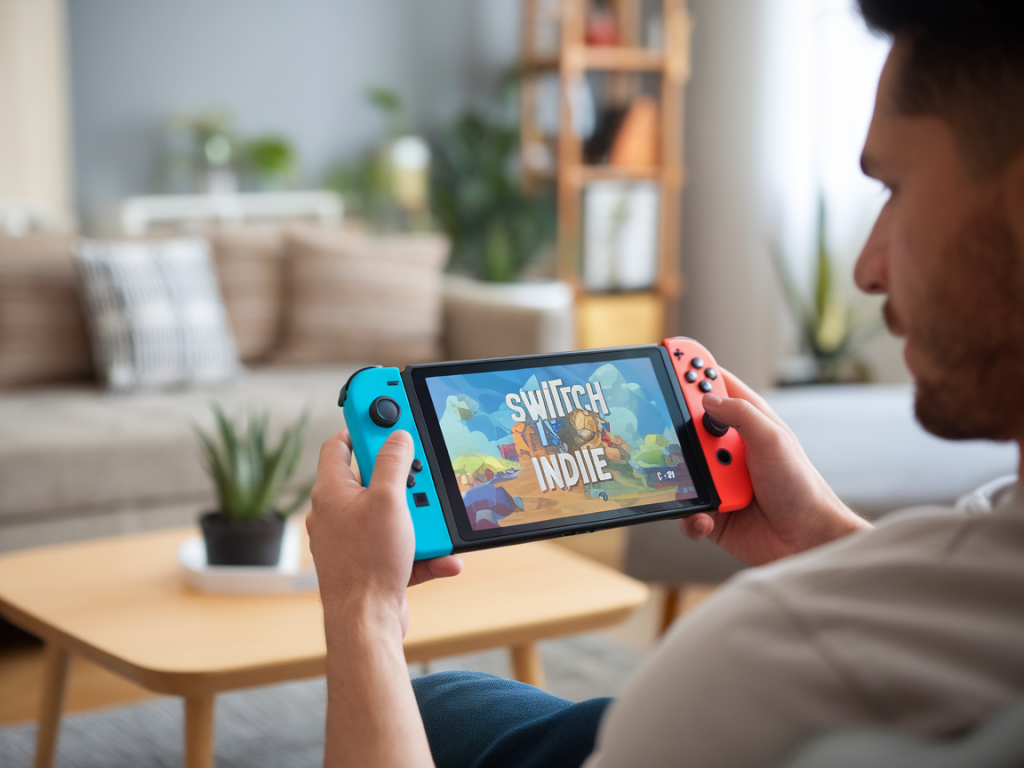
I’ve spent more than a few commutes squeezing quick bursts of gaming into pockets of time that felt way too short to matter. That’s why I keep coming back to Dorfromantik on the Nintendo Switch — an under-the-radar indie that somehow turns a 10–15 minute train ride into a fully satisfying gaming session. It does this by being calming, cleverly structured, and endlessly replayable. If you haven’t tried it yet, consider this your commute-friendly spoiler-free push.
What Dorfromantik actually is (without the jargon)
At its core, Dorfromantik is a tile-placement puzzle game. You’re given hexagonal tiles with bits of landscape on them — fields, forests, rivers, villages, and tracks — and you place them to build a gently expanding countryside. The goal isn’t a high-score rush or frantic combos; it’s about meeting simple objectives in a way that rewards planning and little moments of aesthetic joy. The result is a game that feels like building a miniature map that slowly grows into something coherent and oddly beautiful.
I like to call it “strategic zen.” There’s always something to aim for (complete a railway of X length, join Y fields, make Z lakes), but every move is low-pressure. That’s golden on a commute where you want to unwind rather than ramp up your heartbeat.
Why it works so well for short commutes
Three things make Dorfromantik perfect for 10–20 minute sessions:
On several commutes I’ve walked off the train feeling like I actually spent quality time gaming, not just fiddling with a phone. That’s rare.
How the mechanics encourage bite-sized play
There are a few clever design choices that keep each short session meaningful:
Practical tips for commute play
Here are the practical habits I developed to make the most of tilt-and-go sessions on the Switch.
Which Switch model to use
Any Switch will do, but I have a soft spot for the OLED when playing Dorfromantik on the move. The colors pop and hex tiles read clearly in dim train car light. That said, the standard Switch is perfectly capable — the game runs smoothly and the art style is readable on smaller screens.
| Switch Model | Commute Strength |
| Switch OLED | Best for visuals and contrast in low light |
| Switch (standard) | Great balance of portability and performance |
| Switch Lite | Lightest and most pocket-friendly; perfect if you only play handheld |
My favorite mini-session routines
Depending on how long my ride is, I switch my goals:
Why it’s different from other “bite-sized” games
There are other short-session-friendly indies — mobile puzzlers, roguelike runs, puzzle-platformers — but Dorfromantik hits a sweet spot: it’s tactile and strategic in a low-stress way. It’s not just matching colors or clearing boards; there’s an emergent world-building element. When a commute ends, I don’t feel like I abandoned a stopwatch — I feel like I left a tiny, happy countryside mid-growth, and I look forward to seeing how it evolves next play.
On replays, DLC, and value
The base game is deceptively deep. Different objectives and procedural draws mean each map evolves differently. There are also community-made scenarios and updates that add variety. For the price on the eShop, it’s an easy purchase if you like calm strategy and aesthetics. I rarely need more than 15–30 minutes per day to get my fix, but the game also scales if you want longer sessions on weekends.
Who should play Dorfromantik on the commute?
It’s for you if:
It’s not for you if:
On a crowded platform while most people are doom-scrolling, I often find myself building a little patch of virtual countryside and feeling oddly accomplished. Dorfromantik doesn’t try to be everything; it wants to be a tiny daily ritual, and it nails that. If you’re hunting for an under-the-radar Switch indie that actually makes short commutes feel like full, meaningful game sessions, give it a spin — your next 10 minutes might just be the best part of your day.